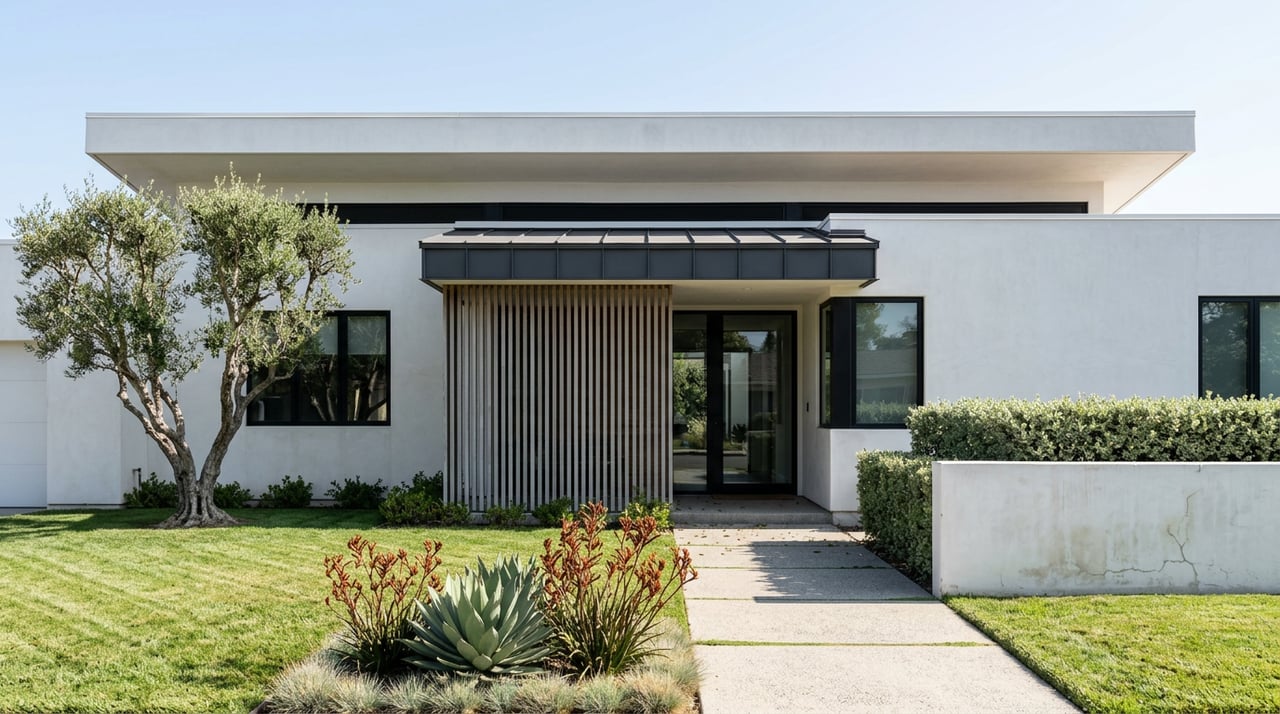
A buyer sits down with the preliminary title report on a Ladera Ranch home in Avendale, sees "Mello-Roos" on the tax bill, and asks the only question most people ask: how much per month? The agent quotes a number. The buyer nods, folds it into the budget next to the HOA dues, and moves on to inspection scheduling.
That's the wrong question, or at least an incomplete one. The number that actually matters is not what the special tax costs this year. It's when it stops.
One line item, six different clocks
According to Finance DTA, Ladera Ranch was built out through a set of six separate Community Facilities Districts, known on tax bills and county filings as CFD 99-1, 2000-1, 2001-1, 2002-1, 2003-1, and 2004-1. Each one issued its own municipal bonds to pay for the roads, sewers, storm drains, and parks that came with building a 4,000-acre master-planned community starting in 1999. Each bond series carries its own repayment schedule. That means "Mello-Roos in Ladera Ranch" isn't a single tax with a single end date. It's at least six overlapping obligations, each on its own timeline, and a buyer comparing two homes in different villages could be comparing two very different remaining terms without realizing it.
In 2021, Voice of OC pressed the county on exactly this question after Orange County officials confirmed they would begin issuing partial refunds once specific CFD bonds were retired. The answer, once county spokeswoman Molly Nichelson and Supervisor Lisa Bartlett provided it, was that Ladera Ranch's original Mello-Roos bonds would be paid off somewhere between August 2029 and August 2034, dates that still sit ahead of any offer written today. Bartlett told the outlet "the CFD bonds continue to get paid off in the future," a plain acknowledgment that the payoff is a rolling process, not a single date. Compare that to nearby Esencia, a newer master-planned community built under the same county CFD process, where the bonds aren't scheduled to retire until sometime between August 2045 and August 2050. Same county, same financing mechanism, roughly fifteen years apart on the calendar.
One report from the Orange County CFO office gets even more specific. CFD 2000-1, the district covering part of Ladera Ranch, lists a parcel tax sunset date of June 30, 2040, along with the per-square-foot formula the county uses to calculate the annual charge on single-family and multi-family parcels. That's a real, filed, fixed date. It doesn't move because a new buyer closes escrow in 2026 instead of 2020.
Why this matters more than the median price
Public sale data on Ladera Ranch homes shifts depending on which slice of the community, and which month, you happen to be looking at. Tracking the market through the summer of 2026, published medians for Ladera Ranch have ranged from the high $700,000s to above $1.2 million, a spread wide enough that quoting one number without context tells a buyer almost nothing useful. That's not a data quality problem. It's a description of the place. Ladera Ranch is nine villages, Avendale, Bridgepark, Covenant Hills, Echo Ridge, Flintridge, Oak Knoll, Terramor, Township, and Wycliffe, each with its own mix of condos, townhomes, and detached estates, built in different phases of a community rollout that began in 1999.
The same phase-by-phase logic applies to the CFDs. Terramor has its Aquatic Park and skate park, while Covenant Hills is the community's only guard-gated village with its higher-end estate product. That's not a reason to avoid one village over another. It's a reason to ask the question before you write an offer instead of after you close.
What the tax bill actually shows you
The county's own filing for CFD 2000-1 lists separate per-square-foot rates for single-family homes and multi-family units and a separate per-acre rate for non-residential parcels.
The combined load of Mello-Roos and HOA dues in Ladera Ranch typically runs in the range of a few hundred dollars a month, layered on top of base property tax and your mortgage payment. Multiple sources tracking South Orange County CFDs put annual Mello-Roos charges in Ladera Ranch and neighboring Rancho Mission Viejo somewhere between roughly $2,000 and $5,000 a year, though the exact figure depends entirely on the parcel's CFD and its formula.
Five questions worth asking before you write an offer
- What is the exact CFD number, or numbers, tied to this specific parcel, not just "Ladera Ranch" generally
- What is the outstanding bond balance and the anticipated final year of the levy for that CFD
- Is the amount calculated by square footage, lot size, or a flat per-unit rate under that district's original formula
- What escalation formula applies
- Has your lender confirmed how the special tax will be escrowed and counted toward your qualifying ratio
The Orange County Treasurer-Tax Collector maintains a Mello-Roos tax map and bond lookup tool that lets you search by parcel, and the county's CFO office publishes annual financial transactions reports that list sunset dates district by district. Both are public and both are worth five minutes before you fall in love with a floor plan.
FAQ
Does every home in Ladera Ranch carry Mello-Roos? Most do, since the tax was the financing mechanism for the community's original infrastructure, but exemptions exist and some early-phase parcels were funded differently. Verify the specific parcel rather than assuming based on the village name alone.
If the bonds are scheduled to retire in the early 2030s, does that show up anywhere before closing? The county's own financial transactions filings, like the one covering CFD 2000-1, list the sunset date directly.
Buying in a master-planned community like Ladera Ranch means buying into a financing structure that most other Orange County neighborhoods never had to build in the first place. That's the tradeoff for the parks, the trails, and the amenities that came with it. Understanding which clock your specific parcel is on, not just this year's payment, is what separates a comparison built on the listing price from one built on the actual cost of owning the home for the next decade.
If you're comparing homes across Ladera Ranch's villages, or weighing Ladera Ranch against a South Orange County community without a CFD at all, Mint Real Estate can pull the specific CFD documentation for any parcel you're considering before you write an offer. Find my dream home.
This article is general information, not legal, tax or financial advice. Consult a qualified professional about your situation.